


Stainless Steel vs Titanium Dental Instruments: Which Material Is Best? (2026 Guide)

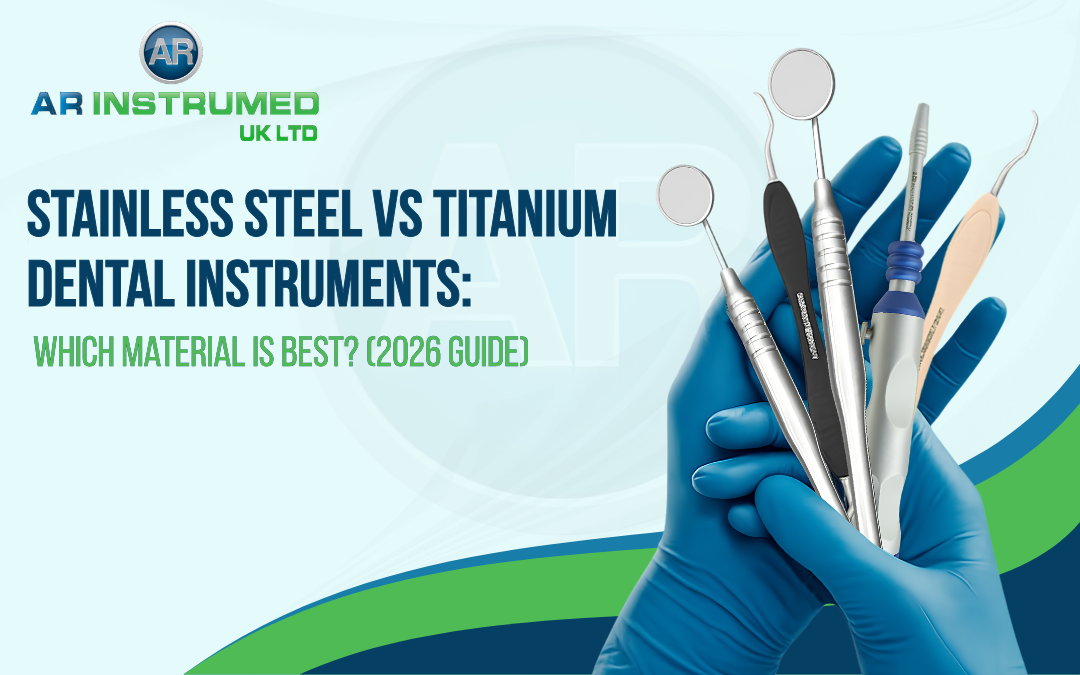
Choosing between stainless steel and titanium dental instruments is one of the biggest decisions a dental practice makes when building its instrument kit. Both materials are trusted across UK clinics, but they perform very differently in terms of weight, corrosion resistance, cost, and long-term durability. This guide breaks down the real differences between stainless steel dental instruments and titanium dental instruments, so dentists, oral surgeons, and clinic managers can choose the best dental instrument material for their specific procedures and budget in 2026.
Dental instrument materials directly affect precision, sterilisation compatibility, and how long tools survive daily clinical use. A poor material choice can lead to premature corrosion, tool fatigue, or discomfort during long procedures. For UK dental practices handling high patient volumes, professional dental instruments need to withstand repeated autoclaving, resist rust, and hold a sharp, precise edge over hundreds of sterilisation cycles. This is exactly why the stainless steel vs titanium dental instruments debate matters so much to practising dentists.
What Are Stainless Steel Dental Instruments?
Stainless steel dental instruments are made from surgical grade stainless steel, an alloy prized for its strength, affordability, and resistance to everyday wear. It has been the industry standard for decades and remains the most widely used dental instrument material across general dentistry, extractions, and restorative work.
Key Benefits of Stainless Steel Instruments
- Excellent strength and rigidity for heavy-duty extraction and surgical instruments
- More budget-friendly than titanium, ideal for stocking full instrument sets
- Fully autoclavable and compatible with standard sterilisation protocols
- Widely available with a large range of dental instruments for dentists across every specialty
- Holds a sharp cutting edge well, suited to precision dental hand instruments
What Are Titanium Dental Instruments?
Titanium dental instruments use medical grade titanium, a lightweight yet remarkably strong metal originally developed for aerospace and surgical applications. Titanium is increasingly popular for implant instruments, microsurgery, and any procedure where weight, biocompatibility, or corrosion resistance is critical.
Key Benefits of Titanium Instruments
- Up to 45% lighter than stainless steel, reducing hand fatigue during long procedures
- Outstanding corrosion resistance, even with frequent sterilisation cycles
- Non-magnetic and MRI-safe, an advantage for implant and diagnostic settings
- Superior biocompatibility, making it a preferred choice for implant surgery
- Naturally rust resistant dental instruments that maintain performance over time
Stainless Steel vs Titanium Dental Instruments: Head-to-Head Comparison
Here is a quick side-by-side comparison to help you evaluate titanium vs stainless steel instruments across the factors that matter most in daily clinical practice.
| Feature | Stainless Steel Instruments | Titanium Instruments |
|---|---|---|
| Weight | Heavier, solid feel | Up to 45% lighter |
| Cost | More affordable upfront | Higher initial investment |
| Corrosion Resistance | Good, with proper care | Excellent, highly resistant |
| Strength & Rigidity | Very high, ideal for heavy-duty work | High strength-to-weight ratio |
| Biocompatibility | Suitable for general use | Superior, preferred for implant work |
| MRI / Imaging Compatibility | Can be magnetic | Non-magnetic, MRI-safe |
| Sterilisation & Autoclaving | Fully autoclavable | Fully autoclavable |
| Typical Use Case | General dentistry, extraction, restorative | Implant surgery, microsurgery, precision work |
Which Dental Instruments Last Longer?
Both materials offer strong dental instrument durability when properly maintained, but they age differently. Stainless steel instruments are highly durable and cost-effective, though they can develop surface corrosion if sterilisation protocols are not followed precisely. Titanium instruments, by contrast, are naturally corrosion resistant dental instruments that tend to retain their finish and function for longer, even under intensive daily use. For clinics prioritising longevity over a full sterilisation cycle lifespan, titanium generally edges ahead, though the gap narrows considerably when stainless steel tools are properly cared for.
Titanium vs Stainless Steel for Implant Surgery
When it comes to implant instruments, orthodontic instruments, and endodontic instruments, titanium is often the preferred material because of its biocompatibility and lightweight handling. Implant surgery in particular benefits from titanium’s non-reactive surface, which minimises the risk of cross-contamination between metals. Stainless steel, meanwhile, remains the go-to choice for periodontal instruments, restorative dental instruments, and general dental surgery instruments where strength and affordability are the priority.
How to Choose the Best Dental Instrument Material for Your Practice
There is no single answer to which material is universally better. The right dental instrument material depends on your clinic’s procedure mix, budget, and sterilisation volume. As a practical dental instrument buying guide: choose stainless steel for general dentistry, extractions, and high-volume tool sets where cost efficiency matters; choose titanium for implantology, microsurgery, and cases where lightweight, ergonomic dental instruments improve precision and reduce hand strain. Many UK practices maintain a hybrid inventory, using both materials strategically across departments.
Why UK Dental Practices Trust AR Instrumed
AR Instrumed (ar-instrumed.co.uk) is a trusted dental instrument manufacturer UK dentists rely on for both stainless steel and titanium dental instruments. With a catalogue of over 2,700 precision-manufactured products spanning extraction, surgery, orthodontic, implantology, diagnostic, prosthetics, and silicone instruments, AR Instrumed supplies clinics across the UK with premium dental instruments UK practices can depend on for accuracy and durability.
Every instrument is produced using modern CNC manufacturing for consistent precision, and the team also offers custom instrument design for practices with specific clinical needs. Whether you are searching for professional dental instruments UK wide, comparing surgical dental instruments, or looking to buy titanium dental instruments UK or stainless steel dental instruments UK, AR Instrumed’s product range and UK-based support make it a reliable dental instrument supplier UK for clinics of every size.
Final Thoughts
Both stainless steel and titanium dental instruments have a firm place in modern UK dental practices. Stainless steel remains unbeatable for affordability, strength, and everyday general dentistry, while titanium leads in implant surgery, biocompatibility, and lightweight precision work. The smartest approach for most clinics is to combine both materials, choosing the right tool for the right procedure rather than committing to just one. Explore the full range of stainless steel and titanium dental instruments at AR Instrumed to build an instrument kit suited to your practice.
Frequently Asked Questions
1. Are titanium dental instruments better than stainless steel?
Titanium instruments are lighter, more corrosion resistant, and offer better biocompatibility, making them ideal for implant surgery. Stainless steel is stronger for heavy-duty work and more affordable, so ‘better’ depends on the procedure and budget.
2. Which dental instrument material lasts longer?
Titanium generally resists corrosion and wear for longer with less maintenance, while stainless steel also offers excellent durability when sterilisation protocols are followed correctly.
3. Why are titanium dental instruments more expensive?
Titanium is more costly to source and machine than stainless steel, and its lightweight, corrosion-resistant properties add value for precision procedures, which is reflected in the price.
4. Can stainless steel dental instruments be used for implant surgery?
Yes, stainless steel instruments can be used for implant procedures, but titanium is usually preferred because of its superior biocompatibility and non-reactive surface.
5. Where can I buy stainless steel or titanium dental instruments in the UK?
UK dental practices can buy both stainless steel and titanium dental instruments directly from AR Instrumed at ar-instrumed.co.uk, which offers a full catalogue of professional, precision-manufactured instruments with UK delivery.