


Silicone Dental Instruments: Benefits, Types, Uses & How to Choose the Best Instruments (2026 Guide)

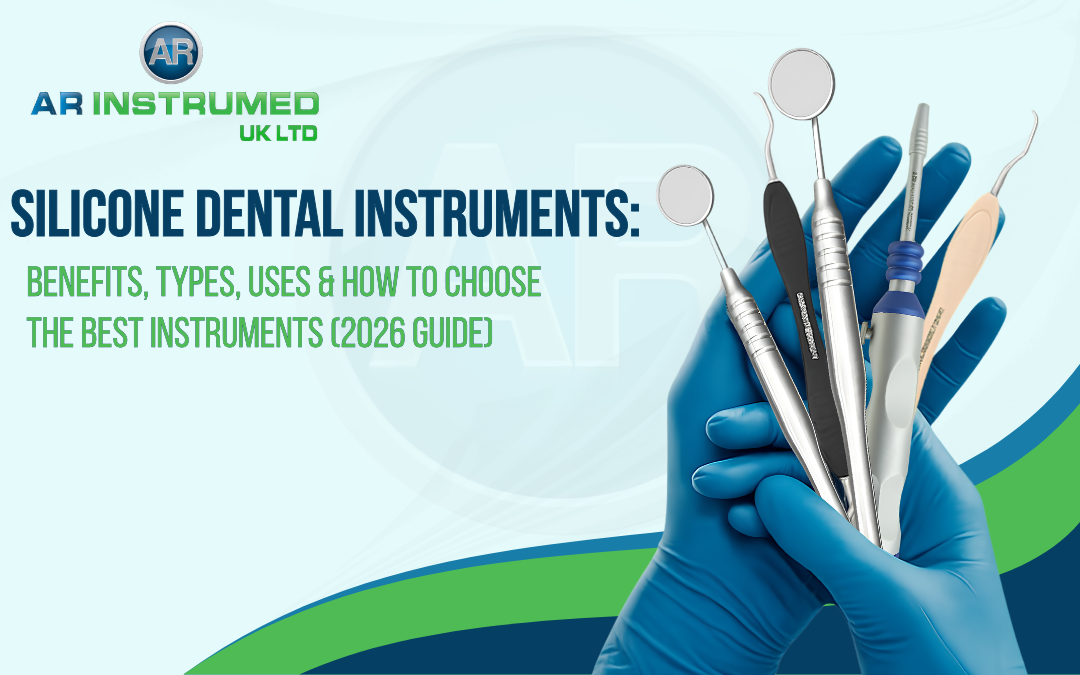
Quick answer: Silicone dental instruments are composite placement and modelling tools with silicone tips that don't stick to composite resin, giving dentists smoother restorations, faster procedures, and less chairside frustration. They're widely used in restorative and cosmetic dentistry across UK clinics.
If you've ever fought with composite sticking to a metal instrument mid-procedure, you already know why silicone dental instruments have become standard kit in modern UK dental practices. They save time, protect your restorations, and make your finished work look better first time, every time.
In this guide, we'll cover what silicone dental instruments are, their key benefits, the main types available, how they're used in restorative and cosmetic work, and how to choose the right set for your clinic. We'll also show you why hundreds of UK dentists, clinics, and distributors trust AR Instrumed UK for their instrument supply.
What Are Silicone Dental Instruments?
Silicone dental instruments are hand instruments typically composite placement, modelling, and finishing tools fitted with medical-grade silicone tips instead of, or alongside, traditional stainless steel working ends.
The silicone tip is the key feature. Unlike metal, silicone resists adhesion to composite resin, so material glides on and shapes cleanly rather than dragging or pulling away mid-application.
Most silicone dental instruments still use a durable stainless steel handle for grip and control, with an interchangeable or fixed silicone working tip. This combination gives dentists the strength and precision of traditional dental hand instruments with the non-stick performance modern composite work demands.
They’re a core part of any restorative dentist’s toolkit, alongside composite placement instruments, modelling instruments, and general dental restorative instruments used daily in UK practices.
Browse our full range: Shop Silicone Dental Instruments
Shop Silicone Dental InstrumentsBenefits of Silicone Dental Instruments
In short: silicone dental instruments reduce composite sticking, improve restoration surface quality, save chair time, and lower material waste.
Key benefits include:
- Non-stick performance – Composite resin doesn’t cling to silicone tips, so you get cleaner placement and contouring.
- Smoother, more natural contours – Better material control means fewer voids, less pitting, and a more polished final surface.
- Faster procedures – Less time spent scraping instruments clean means shorter appointments and better patient throughput.
- Reduced material waste – Composite stays where you place it instead of pulling away with the instrument.
- Gentler on soft tissue – Silicone tips are less likely to cause micro-trauma during contouring near the gingival margin.
- Durability – Quality silicone tips withstand repeated sterilisation cycles without degrading quickly.
- Better patient outcomes – Cleaner, more precise restorations mean fewer remakes and higher patient satisfaction.
For busy clinics, these small efficiencies add up across dozens of restorations a week — which is exactly why silicone composite instruments have become a preferred choice over traditional metal-only sets.
Types of Silicone Dental Instruments
The main types are composite placement instruments, composite modelling instruments, condensers/pluggers, and combination (double-ended) instruments.
| Type | Primary Use | Best For |
|---|---|---|
| Composite Placement Instruments | Delivering and packing composite into the cavity | General restorative work |
| Composite Modelling Instruments | Shaping and contouring anatomy before curing | Anterior aesthetic restorations |
| Silicone Condensers/Pluggers | Compacting composite for density and adaptation | Class I–V restorations |
| Double-Ended Instruments | Combining two functions in one handle | Efficiency-focused clinics |
| Interchangeable-Tip Sets | Swappable silicone tips on one handle | Practices wanting flexibility and cost control |
Many dentists build a working set from a mix of these a placement instrument for bulk composite, a modelling instrument for anatomical detail, and a condenser for proximal or posterior work.
Not sure which set fits your practice? Request a Wholesale Quote and our team will recommend the right configuration.
Common Uses in Restorative & Cosmetic Dentistry
Silicone dental instruments are used for composite bonding, direct veneers, Class III–V restorations, anterior aesthetic layering, and composite contouring.
Common clinical applications include:
- Direct composite bonding and smile makeovers
- Anterior and posterior composite restorations
- Layering techniques for shade and translucency blending
- Diastema closure and tooth reshaping
- Composite repair and touch-up work
- Provisional restoration fabrication
Because silicone tips don’t drag or stick, they’re particularly valued in cosmetic dentistry, where fine control over surface texture and anatomy directly affects the aesthetic result.
Why Dentists Prefer Non-Stick Composite Instruments
Dentists prefer non-stick silicone instruments because they eliminate the “pull-back” effect that distorts composite during placement, giving more predictable, efficient results.
With traditional metal instruments, composite resin often adheres to the tip and lifts away as the instrument is withdrawn leaving pitted or uneven surfaces that need extra finishing. This is the single biggest reason UK dentists switch to non-stick dental instruments.
Non-stick composite instruments also mean:
- Fewer instrument changes and less wiping down mid-procedure
- Reduced need for bonding agents on the instrument tip
- More consistent results across junior and senior clinicians
- Lower risk of contamination between layers
For practices focused on efficiency and consistent aesthetic outcomes, this single feature often justifies the switch to silicone instruments across the board.
How to Choose the Best Silicone Dental Instruments
Choose silicone dental instruments based on tip shape, handle ergonomics, material grade, sterilisation compatibility, and supplier reliability.
When comparing options, consider:
- Tip design – Match the shape (ball, flat, tapered, or shovel) to your most common procedures.
- Handle material and grip – Stainless steel handles with a textured or hexagonal grip reduce hand fatigue during long procedures.
- Silicone quality – Medical-grade silicone should retain shape and non-stick properties after repeated autoclaving.
- Sterilisation compatibility – Confirm the instrument is autoclave-safe to the temperatures your clinic uses.
- Set vs. single instruments – Full kits offer better value; single replacements suit practices topping up an existing set.
- Supplier reputation – Choose a dental instrument supplier UK-based, with clear quality standards and responsive support.
A well-chosen set of dental hand instruments should feel like a natural extension of the clinician’s hand — precise, balanced, and reliable case after case.
See our full range: Browse Our Complete Dental Instrument Collection
Browse Our Complete Dental Instrument CollectionWhy Quality Matters
Low-quality silicone instruments lose their non-stick properties quickly, degrade under sterilisation, and can compromise restoration accuracy — so quality control matters as much as design.
Cheaper silicone tips often:
- Harden or crack after repeated autoclave cycles
- Lose their non-stick coating within weeks of regular use
- Have inconsistent tip shaping, affecting precision
- Come with poorly finished handles that affect grip and control
Investing in professional dental instruments and premium dental instruments from a reputable manufacturer reduces long-term replacement costs and protects the consistency of your clinical results. For a busy clinic, that reliability is worth far more than a lower upfront price.
Why Buy from AR Instrumed UK
At AR Instrumed UK, we specialise in supplying high-quality dental instruments — including silicone composite and modelling instruments to dentists, clinics, wholesalers, and distributors across the United Kingdom.
Here’s what sets us apart:
- Precision manufacturing – Every instrument is made to consistent, professional-grade specifications.
- Trusted quality control – We hold our silicone and stainless steel instruments to strict standards, so they perform reliably restoration after restoration.
- Wide product range – From composite placement instruments to full restorative kits, we stock what UK practices actually use.
- Fast UK delivery – Get your dental supplies UK-wide without long lead times.
- Wholesale and bulk options – Competitive pricing for dental distributors and multi-site practices.
- Genuine customer support – Our team helps you choose the right instruments for your clinical needs, not just the most expensive option.
Whether you’re an independent dentist, a growing clinic, or a distributor sourcing dental equipment UK-wide, AR Instrumed UK is built to be your long-term supply partner.
Learn more About Us, or explore more articles on our blog.
Ready to upgrade your instrument kit? Shop Silicone Dental Instruments today.
Conclusion
Silicone dental instruments have become essential for UK dentists who want cleaner composite placement, faster procedures, and more predictable aesthetic results. From composite placement and modelling to condensing and contouring, the right silicone instrument set can noticeably improve both clinical efficiency and patient outcomes.
Choosing a trusted dental instrument supplier UK-wide one that prioritises quality, precision, and reliable delivery makes all the difference in the long run.
Contact Our Team Today to discuss your practice's needs, or visit AR Instrumed UK to explore our full range of professional dental instruments.
Frequently Asked Questions
Where can I buy Silicone Dental Instruments in the UK?
You can buy silicone dental instruments in the UK directly from AR Instrumed UK, which supplies premium composite placement and modelling instruments to dentists, clinics, and wholesale distributors across the country, with fast UK-wide delivery.
What are silicone dental instruments used for?
Silicone dental instruments are used mainly for composite placement, modelling, and contouring during restorative and cosmetic dental procedures, such as composite bonding, direct veneers, and Class I–V restorations.
Why do silicone instruments not stick to composite?
The silicone tip material has a low-adhesion surface that composite resin doesn’t bond to, unlike metal instruments, which allows composite to be placed and shaped cleanly without pulling or dragging.
Are silicone dental instruments autoclave-safe?
Most professional-grade silicone dental instruments are autoclave-safe, but this depends on the specific silicone material used, so it’s important to check the manufacturer’s sterilisation guidelines before use.
What’s the difference between silicone and metal composite instruments?
Metal composite instruments offer rigidity but can cause composite to stick and distort during placement, while silicone instruments provide a non-stick working surface that gives smoother contouring and more predictable results, often used together in the same kit.
Looking for reliable dental supplies UK-wide? Explore our complete range of professional and premium dental instruments at AR Instrumed UK, or request a wholesale quote for your clinic or distribution business today.