


Dental Extraction Instrument Sets: What Should a Professional Kit Include?

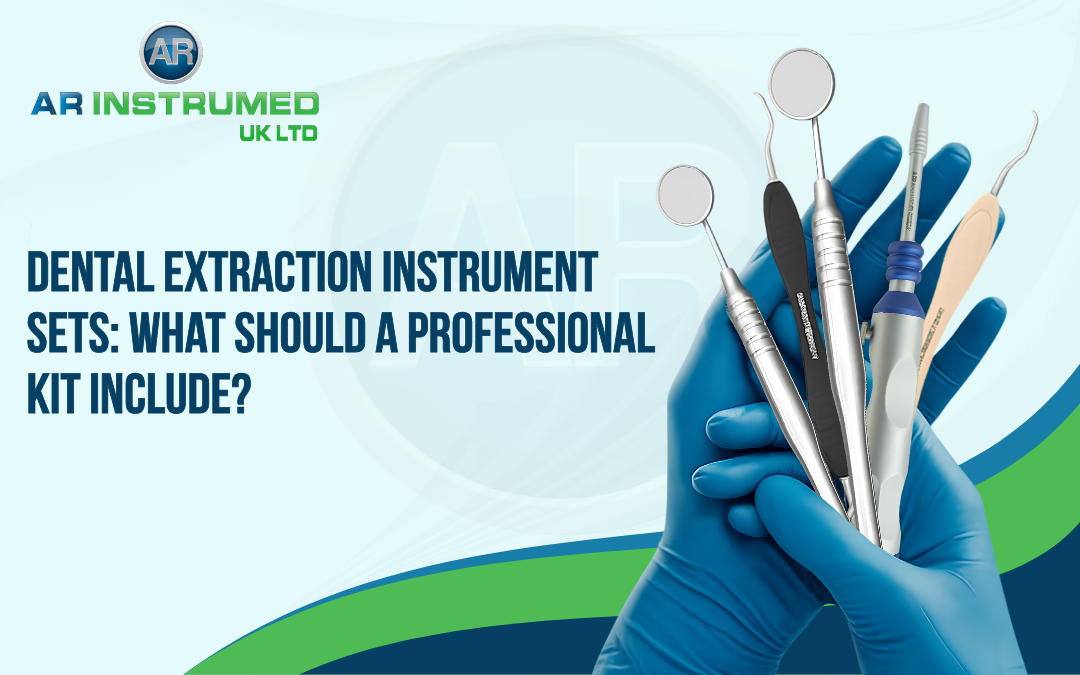
Choosing the right dental extraction instrument sets affects how smoothly a surgery runs, how easily trays are reprocessed and how consistently instruments perform. Individual dentists want a reliable kit for everyday use. Clinics, hospitals and distributors also need repeatable specifications and dependable supply.
This guide covers what a professional kit typically includes, how basic and surgical sets differ and what to check before you buy.
What Is a Dental Extraction Instrument Set?
A dental extraction instrument set is a grouped selection of hand instruments used by trained clinicians to loosen, grip and remove teeth or roots. It usually combines forceps and elevators, often with luxators, periotomes or surgical accessories, organised for sterilisation and storage.
A set differs from buying single instruments. It gives a surgery a defined, repeatable tray setup. For a wider explanation of each tool, see our dental extraction instruments guide .
What Should a Professional Dental Extraction Instrument Set Include?
No single list suits every practice. The contents depend on the procedures performed and the clinician’s training. These are the main groups to consider:
- Extraction forceps: Grip the crown or root once the tooth is loosened. Patterns differ by tooth group and arch. See our extraction forceps range.
- Root and dental elevators: Loosen a tooth or retained root before forceps are applied. Browse root elevators.
- Luxators and periotomes: Thinner, sharper instruments designed to work along the periodontal ligament.
- Micro elevators: Fine-tipped options for small roots and limited access. See micro elevators.
- Periosteal elevators: Used to reflect soft tissue where surgical access is needed.
- Supporting surgical instruments: For example bone rongeurs, scissors or needle holders. Explore dental surgery instruments.
- Storage and sterilisation: A tray or cassette that keeps the set organised through reprocessing. See sterilisation trays and bowls.
Remember: Not every set needs every item. A compact kit for routine extractions looks very different from one assembled for oral surgery.
Basic vs Surgical Dental Extraction Instrument Sets
Basic vs Surgical Extraction Kit
| Comparison | Basic Extraction Kit | Surgical Extraction Kit |
|---|---|---|
| Typical Focus | Routine extractions of accessible teeth | More complex cases needing surgical access |
| Core Instruments | Forceps for common tooth groups, straight and curved elevators | Forceps and elevators plus luxators or periotomes, micro elevators and a periosteal elevator |
| Supporting Items | Often minimal | May include rongeurs, scissors, needle holders and other surgical instruments |
| Tray Size | Compact | Larger, so check tray and steriliser capacity |
| Typical Buyers | General practices, new associates, replacement stock | Oral surgery services, hospitals, teaching institutions |
This table is a general guide only. The final selection depends on the procedures performed, the clinician’s training and the manufacturer’s instructions.
How to Choose the Right Dental Extraction Instrument Set
- Procedures and clinical needs: list what you actually carry out, then build the set around it.
- Patterns: match forceps and elevator patterns to your tooth groups and access requirements.
- Material and finish: look for stainless steel with a smooth, burr-free finish that cleans easily.
- Handle design: grip, balance and weight matter across a full list. Silicone-handled options are also available.
- Reprocessing: check the instructions for use for cleaning and autoclave compatibility for each product.
- Documentation and support: review product pages, specifications and supplier contact options.
- Quantity: decide whether you need one kit, matched kits for several rooms or ongoing bulk supply.
For a broader look at tray planning, read our guide to choosing dental extraction instruments for your practice .
Buying Dental Extraction Instrument Sets in the UK
- Clear product descriptions, with exact patterns and sizes.
- Material information and instructions for use.
- Stock availability and delivery terms.
- Returns terms.
- Regulatory and compliance documentation. AR Instrumed UK publishes a certifications page.
- Whether the supplier offers advice when you are unsure which pattern suits your caseload.
Our guide to choosing a dental instrument supplier in the UK covers these checks in more detail.
Dental Extraction Instrument Sets for Clinics, Hospitals & Distributors
Professional buyers usually have different priorities from individual clinicians. Multi-site groups want the same instrument selection in every surgery. Hospitals and dental schools need predictable replenishment. Distributors need clear specifications and reliable availability.
If you are buying in volume, confirm these points with the supplier in writing:
- Availability and lead times for your quantities.
- Whether sets can be matched across sites.
- Documentation for tenders or procurement files.
- Options for repeat orders.
Wholesale, bulk and dealer requirements can be raised through the dealer enquiry form, or you can contact the AR Instrumed UK team directly.
Why Explore AR Instrumed UK?
Explore Dental Extraction Instruments at AR Instrumed UK
AR Instrumed UK supplies professional dental instruments through its online shop. The extraction category includes forceps, root and micro elevators and related instruments. The wider range covers surgery, diagnostic and sterilisation products.
The site currently states next-day UK delivery on eligible in-stock orders, a 14-day money-back guarantee and a discount for registered customers. Check the terms on the website at the time of ordering.
*Terms, eligibility and applicable conditions may apply. Please check the latest website information before ordering.
For dentists and practices: Browse the extraction range and compare patterns by instrument type.
For clinics, hospitals, dealers and distributors: Send a wholesale enquiry to discuss bulk supply.
Frequently Asked Questions
What should a professional dental extraction instrument set include?
It depends on the procedures performed, but it typically includes extraction forceps for the relevant tooth groups, root and micro elevators, luxators or periotomes and a periosteal elevator. Surgical sets may add bone rongeurs and other surgical instruments, plus a sterilisation tray.
What is the difference between a basic and surgical dental extraction kit?
A basic kit focuses on forceps and elevators for routine extractions. A surgical kit adds instruments for access, bone and soft-tissue management, such as periosteal elevators and rongeurs. The right choice depends on the clinician’s training and caseload.
Which instruments are essential for tooth extraction?
Most extraction kits are built around forceps matched to tooth groups and elevators or luxators to loosen teeth before gripping. Beyond these, essentials vary by procedure and clinician preference.
How do I choose a dental extraction instrument set for my practice?
Start with the procedures you carry out, then compare instrument patterns, stainless steel finish, handle ergonomics, sterilisation compatibility and instructions for use. For several sites, also check availability and repeat supply.
Where can I buy dental extraction instrument sets in the UK?
Dental professionals can buy from specialist dental instrument suppliers such as AR Instrumed UK, which lists extraction instruments online. Larger buyers can use the dealer enquiry form for bulk or wholesale requests.
Conclusion
The right dental extraction instrument sets match your procedures, suit your sterilisation workflow and can be reordered consistently. Compare patterns, finish and documentation first, then decide between a basic and a surgical configuration.
Dentists and practices can explore AR Instrumed UK’s extraction instruments . Clinics, hospitals, dealers and distributors can submit a dealer enquiry to discuss bulk or wholesale supply.
Instruments should only be used by suitably trained, registered clinicians and in line with the manufacturer’s instructions for use.