

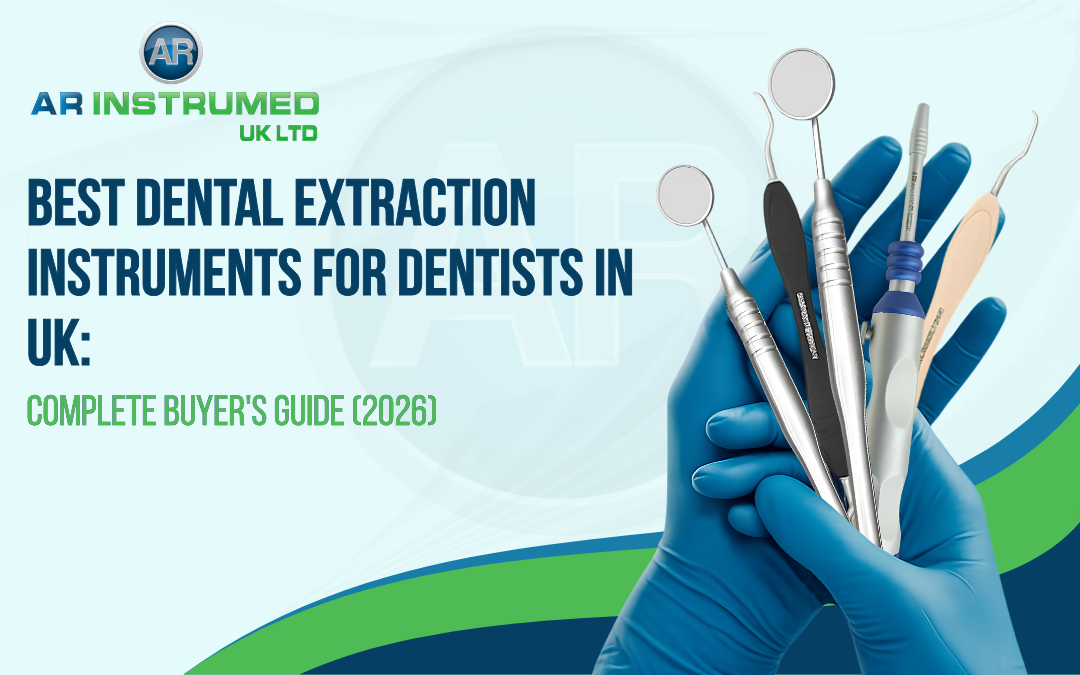
Best Dental Extraction Instruments for Dentists in UK: Complete Buyer’s Guide (2026)

Introduction
Choosing the right dental extraction instruments affects patient safety, procedure time, and clinical outcomes. This guide explains what UK dentists, oral surgeons, and dental clinics should look for when buying extraction forceps, elevators, and surgical kits and why instrument quality matters as much as technique. Learn more about professional dental instruments at AR Instrumed UK.
Quick Answer
The best dental extraction instruments for UK practices are precision-forged German stainless steel forceps and elevators, matched to tooth type and root morphology, sourced from a supplier that offers consistent quality control and UK-based delivery.
Whether you're outfitting a new surgery, restocking a hospital department, or sourcing wholesale for a dental school, this guide covers the essentials. Explore professional dental extraction instruments at AR Instrumed UK.
Why High-Quality Dental Extraction Instruments Matter
Instrument quality directly influences three things: control during the procedure, patient comfort, and how long the instrument lasts under repeated sterilisation cycles.
Poorly forged forceps can flex under load, slip on the tooth surface, or corrode after only a few autoclave cycles. This increases procedure time and can compromise infection control once surface pitting begins.
For busy clinics and hospital departments, instrument reliability also affects operating costs. Instruments that hold their edge and resist corrosion need replacing less often, which matters for procurement teams managing multi-surgery or multi-site budgets.
Essential Dental Extraction Instruments Every Dentist Needs
A well-equipped extraction kit typically includes:
- Extraction forceps upper and lower sets, shaped for incisors, molars, premolars, and roots
- Straight and curved elevators for luxating and loosening teeth before forceps are applied
- Root elevators for retrieving fractured root fragments
- Periotomes for atraumatic extraction and ridge preservation cases
- Bone rongeurs and curettes for socket debridement and minor bone recontouring
- Needle holders and surgical scissors for suturing after extraction
Most UK practices build a core set first, then add tooth-specific forceps as caseload demands.
Types of Dental Extraction Forceps
Forceps are generally categorised by jaw shape and the tooth they’re designed for:
| Forceps Type | Common Use | Jaw Design |
|---|---|---|
| Upper universal forceps | Upper anteriors and premolars | Straight, narrow beaks |
| Upper molar forceps (left/right) | Upper first and second molars | Angled, wider beaks with buccal fluting |
| Lower universal forceps | Lower anteriors and premolars | Angled at 90° to the handle |
| Lower molar (cowhorn) forceps | Lower molars with divergent roots | Pointed beaks for root separation |
| Root forceps | Retained roots and fragments | Fine, narrow tips |
Selecting the correct forceps for the tooth reduces the force needed and lowers the risk of root or bone fracture.
Dental Elevators and Their Uses
Elevators loosen the periodontal ligament before forceps are applied, which reduces the pressure needed during extraction.
- Straight elevators general-purpose luxation for most tooth types
- Curved (Cryer) elevators used in pairs to remove root fragments, particularly in molar sockets
- Winter elevators for impacted or partially erupted teeth requiring greater leverage
Elevator selection often depends on root anatomy and whether a tooth is erupted, impacted, or fractured at the gumline.
Root Elevators vs Forceps
Quick Answer
Elevators loosen a tooth by breaking the periodontal ligament attachment, while forceps grip and remove the tooth once it's mobile. Most extractions use both, in sequence.
| Instrument | Primary Function | When Used |
|---|---|---|
| Elevators | Loosen and luxate | Before forceps, or alone for root fragments |
| Forceps | Grip and deliver the tooth | Once the tooth is sufficiently mobile |
Relying on forceps alone, without adequate luxation, is one of the more common causes of root fracture during extraction.
How to Choose the Best Extraction Instruments
When evaluating extraction instruments, UK buyers should assess:
- Material and forging quality forged (not cast) stainless steel holds an edge longer and resists deformation
- Grip design serrated, ergonomic handles reduce slippage and hand fatigue
- Corrosion resistance instruments should withstand repeated autoclave cycles without pitting
- Range completeness a supplier offering full tooth-specific sets simplifies procurement
- Compliance and traceability CE marking and clear manufacturing origin
- Supplier reliability consistent stock availability and UK delivery timelines
Clinics sourcing for multiple surgeries or teaching environments should also confirm bulk pricing and reordering support.
German Stainless Steel vs Standard Instruments
Quick Answer
German stainless steel dental instruments are typically forged to tighter tolerances and higher-grade steel specifications than standard instruments, giving better edge retention, corrosion resistance, and longevity under repeated sterilisation.
| Factor | German Stainless Steel | Standard Instruments |
|---|---|---|
| Forging process | Precision-forged | Often cast or lower-spec forged |
| Corrosion resistance | High | Variable |
| Edge/jaw retention | Long-lasting | Wears faster |
| Typical lifespan | Extended with proper care | Shorter, more frequent replacement |
| Upfront cost | Higher | Lower |
The higher upfront cost of premium instruments is generally offset by longer service life and fewer replacements, particularly in high-throughput settings.
Common Mistakes to Avoid When Buying Dental Instruments
- Buying on price alone the cheapest forceps often need replacing sooner
- Ignoring tooth-specific design using universal forceps where a molar-specific pattern would give better control
- Overlooking after-sales support no reordering or bulk pricing options
- Skipping supplier verification no clarity on material origin or manufacturing standards
- Underestimating sterilisation demands instruments that degrade quickly under autoclave use
Maintenance and Sterilisation Tips
- Rinse instruments promptly after use to prevent blood and debris from drying onto the surface
- Use an enzymatic cleaner before autoclaving to remove organic material from joints and serrations
- Inspect forceps beaks and elevator tips regularly for wear, pitting, or misalignment
- Lubricate hinged instruments with autoclavable instrument milk to preserve movement
- Follow manufacturer guidance on autoclave cycles and temperatures to avoid premature corrosion
Proper maintenance extends instrument lifespan significantly and is a worthwhile investment alongside the instruments themselves.
Why Choose AR Instrumed UK
AR Instrumed UK supplies premium German stainless steel dental instruments to dentists, oral surgeons, dental clinics, hospitals, universities, and distributors across the UK.
The range covers tooth-specific extraction forceps, elevators, and surgical instruments, with a focus on precision, durability, and competitive pricing for both individual practices and wholesale buyers. UK-based delivery helps clinics and hospital departments restock efficiently without long lead times.
For practices, dental schools, and distributors looking to standardise on a reliable instrument range, AR Instrumed UK offers a straightforward way to source quality extraction instruments from a single supplier.
Final Buying Recommendations
- Build a core extraction set first: universal forceps (upper/lower), a straight elevator, and a curved elevator
- Add tooth-specific forceps (molar, root, cowhorn) as your caseload requires
- Prioritise forged German stainless steel for instruments used daily
- Confirm bulk/wholesale pricing if ordering for a hospital, university, or multi-surgery practice
- Choose a supplier with UK stock availability to avoid procurement delays
Frequently Asked Questions
What are the best dental extraction forceps for a UK dental practice?
The best choice depends on the tooth being extracted. Most UK practices build a core set of upper and lower universal forceps, then add molar-specific and root forceps as caseload demands. Forged German stainless steel is generally preferred for daily use.
How much do professional dental extraction instruments cost in the UK?
Pricing varies by instrument type, material, and whether you’re buying individually or as part of a wholesale order. Premium German stainless steel instruments typically cost more upfront than standard instruments but tend to last longer under regular sterilisation.
What is the difference between dental elevators and extraction forceps?
Elevators loosen a tooth by breaking the periodontal ligament attachment before removal, while forceps grip and deliver the mobilised tooth. Most extractions use elevators first, followed by forceps.
Why are German stainless steel dental instruments considered better?
German stainless steel instruments are typically forged to tighter tolerances, giving better edge retention, corrosion resistance, and a longer working life compared with lower-spec standard instruments.
Where can UK dentists buy premium dental extraction instruments online?
UK dentists, clinics, hospitals, and universities can source premium German stainless steel extraction instruments online through suppliers such as AR Instrumed UK, which offers individual and wholesale ordering with UK delivery.
Ready to Upgrade Your Extraction Kit?
Explore AR Instrumed UK's range of premium German stainless steel dental extraction instruments — forceps, elevators, and surgical sets built for precision and durability. For hospitals, universities, and distributors, bulk and wholesale enquiries are welcome. Browse the full range or get in touch with the AR Instrumed UK team to request a quote today.